
Walk into a dispensary for the first time and your eyes go where the marketing wants them to go: the big THC number. Twenty-eight percent sounds better than eighteen percent, so it must be stronger, better, worth the extra money. Right?
Not really. THC percentage is one of the least useful numbers on the label for predicting how a product will actually feel — and experienced buyers have largely stopped shopping by it. What they’re reading instead is the terpene list. Terpenes are the aromatic compounds that give cannabis its smell and flavor — and they’re becoming the real menu. This guide explains what they are, introduces the five you’ll see most often, and shows you how to choose by the experience you’re after instead of by a single percentage.
Why THC % Alone Misleads
THC is the main intoxicating compound in cannabis, so its percentage isn’t meaningless — but it misleads in predictable ways:
- It’s a ratio, not a dose. A percentage tells you concentration, not how much you’ll consume or how a product is formulated. A small amount of a high-percentage product and a larger amount of a lower-percentage one can deliver similar totals.
- It ignores everything else in the plant. Cannabis contains over a hundred cannabinoids plus terpenes, and researchers hypothesize these compounds interact — an idea often called the “entourage effect.” The research is still developing, but it is one reason two products with identical THC numbers can feel noticeably different.
- High numbers reward the wrong shopping habit. Chasing maximum THC is like choosing wine by alcohol percentage alone. You’d get the strongest bottle, not the one you enjoy — and for beginners, stronger often means a less comfortable experience, not a better one.
- Lab numbers vary. Testing methods and results differ between labs and batches, so treat the figure as approximate rather than a precise ranking.
The THC number tells you how strong the engine is. The terpenes tell you where the car tends to go.
Meet the Terpenes
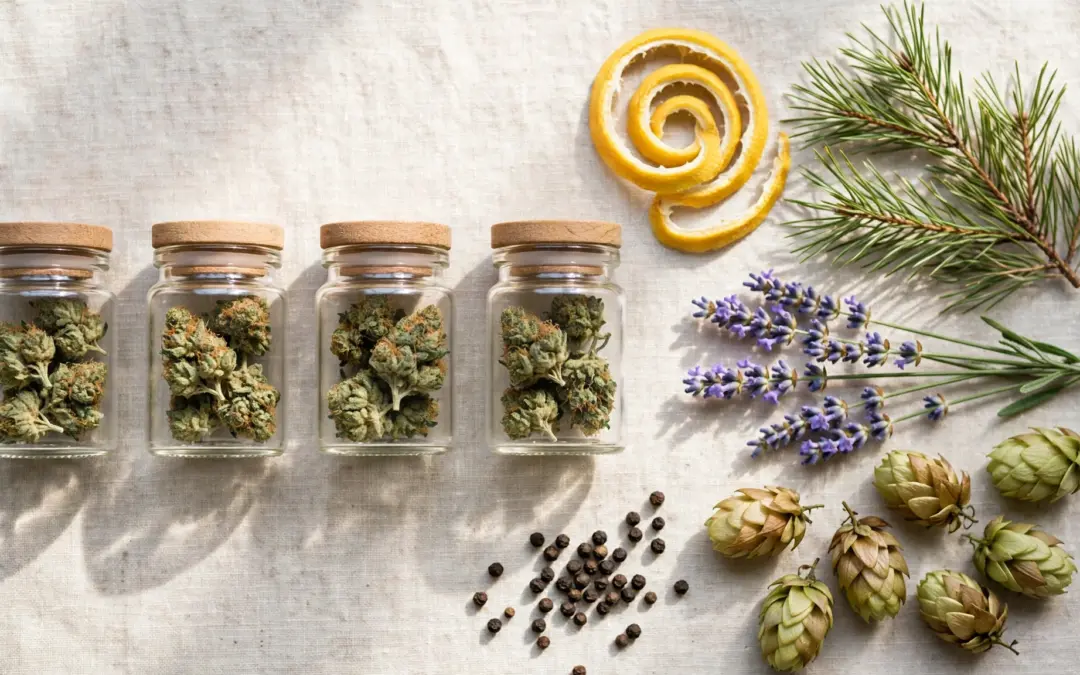
Terpenes aren’t unique to cannabis — they’re found across the plant world, which is why so many of them smell familiar. Here are the five that appear most often on dispensary labels, described the way budtenders talk about them. Note that most research on terpenes comes from aromatherapy, animal studies, or early-stage work, so treat these profiles as widely used consumer shorthand — a starting point for your own notes, not a guarantee of any effect.
- Myrcene — the most common terpene in modern cannabis. Earthy, musky, slightly fruity; also found in mangoes, hops, and lemongrass. In dispensary shorthand, myrcene-dominant products are the ones budtenders point to for evening, wind-down use.
- Limonene — bright citrus, found in lemon and orange rinds. The shorthand association is daytime and mood: products led by limonene are commonly described by consumers as uplifting and are often recommended for social, active settings.
- Pinene — sharp pine and fresh herbs, the same compound that makes a pine forest smell the way it does. Consumers often describe pinene-forward products as clearer-headed and more focused in feel compared with heavier profiles.
- Linalool — floral lavender, also found in lavender oil and some spices. The shorthand here is calm: linalool-led products are frequently chosen for relaxing, low-key occasions.
- Caryophyllene — warm, spicy black pepper. Unusual among terpenes because it also interacts with the body’s endocannabinoid system in laboratory research, which is why it gets extra attention from scientists. Consumers reach for caryophyllene-forward products across a wide range of occasions.
Browse the 420 Point strains section with these five names in mind and the profiles start to read like flavor-and-occasion descriptions rather than code.
How to Read a Dispensary Menu or Label
A good label or menu listing gives you more than a THC number. Here’s what to scan for, in order:
- The top two or three terpenes, and their amounts. Many labels list total terpene percentage and the dominant terpenes. A product with a named, measurable terpene profile is easier to learn from than one that lists none.
- The full cannabinoid panel. Note CBD content as well as THC. Products with meaningful CBD alongside THC are often described by consumers as more balanced in feel.
- The harvest and test dates. Terpenes are volatile — they evaporate and degrade over time. Fresher product generally smells more vivid, and smell is your own built-in terpene detector.
- Your nose. Where regulations allow it, smell the product. The aromas you can identify — citrus, pine, lavender, pepper, earth — are the terpenes announcing themselves. If it smells like nothing, the profile has likely faded.
For the deeper background on how these compounds are studied, the 420 Point cannabis science section is the place to keep reading.
Insights
- Shop by dominant terpene, not by strain name. Strain names aren’t standardized — the same name can carry different profiles from different growers. The lab-tested terpene list is the more reliable description of what’s in the jar.
- Total terpene percentage matters too. Two products can share a dominant terpene while one has twice the overall aromatic content. Higher total terpene content generally means a more pronounced flavor and aroma.
- Your own log beats any chart. Terpene responses are individual. A simple note after each purchase — product, top terpenes, occasion, how it suited you — teaches you more in five purchases than any guide can.
- Indica/sativa labels are rough tradition, not chemistry. The terpene and cannabinoid panel describes a specific batch far better than the old two-category system.
Questions to Ask a Budtender
Budtenders answer the same “what’s strongest?” question all day. Ask these instead and you’ll get their real knowledge:
- “What are the dominant terpenes in this one?”
- “I’m choosing for [an evening in / a daytime hike / a social dinner] — what profile would you pick?”
- “Do you have something with a similar terpene profile but lower THC?”
- “Which of these was harvested or tested most recently?”
- “What do people buy when they want the flavor of this strain in a milder product?”
And whatever you choose: start low and go slow, especially with anything new to you. That’s standard harm-reduction advice everywhere cannabis is sold legally — take a small amount, wait, and learn how that particular product suits you before having more.
A Quick Word on Rules and Safety
Cannabis laws vary widely by state and country, and products legal in one place may be prohibited in another — check your local rules before buying, possessing, or traveling with cannabis, and never cross borders with it. Terpenes and cannabinoids can also interact with prescription medications, so if you take regular medication or have a health condition, talk with a clinician or pharmacist before using cannabis products. This article is education, not medical advice.
The menu is changing. The buyers getting the most out of it aren’t the ones chasing the biggest number — they’re the ones who learned to read the whole label, starting with the terpenes.
